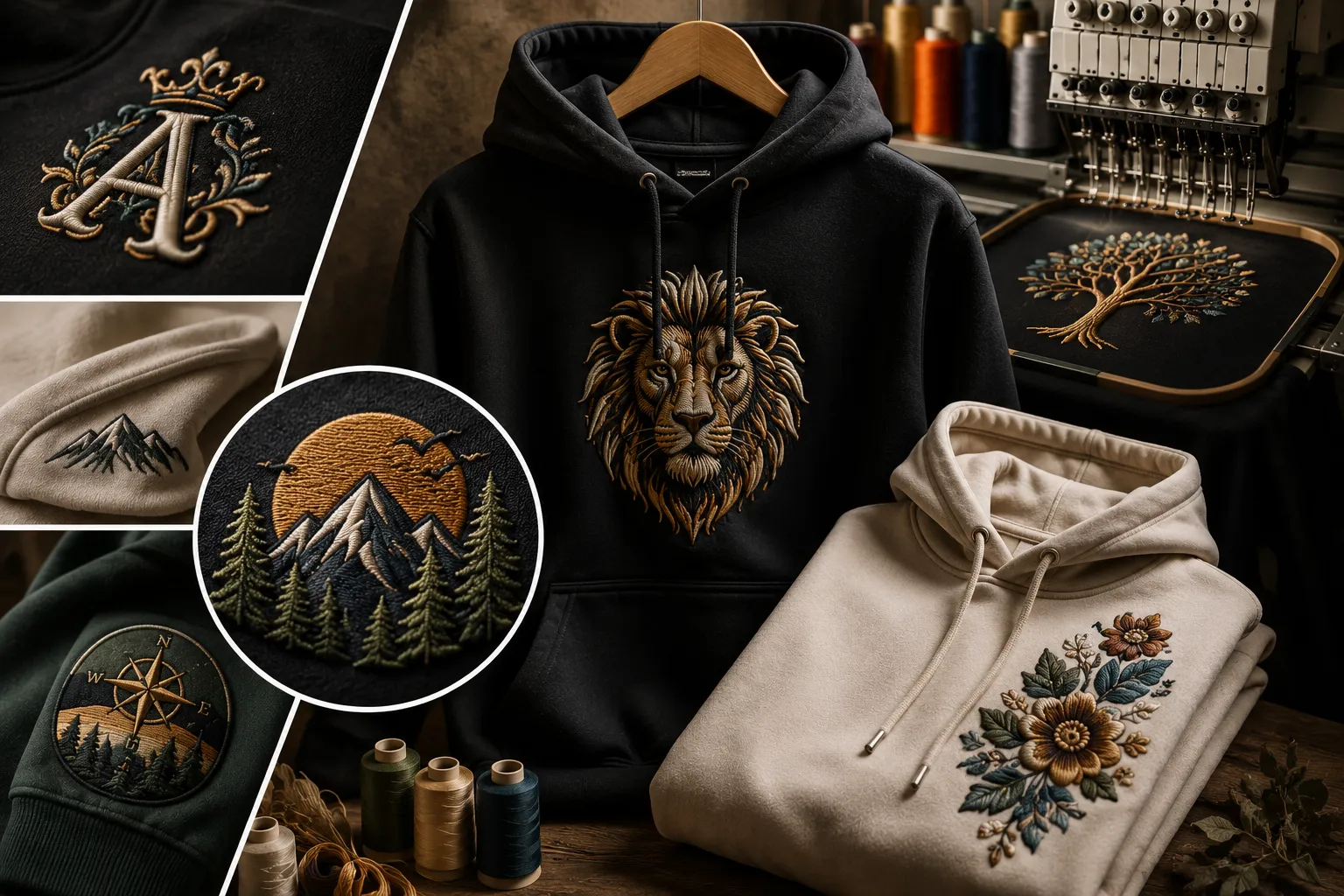
There is a reason a stitched logo on a hoodie feels different from a printed one. Fleece has weight and texture and when thread sits raised against that surface it creates a look that feels earned rather than mass produced. Custom embroidery on hoodie fabric has become the branding choice of streetwear labels corporate teams and everyday apparel brands who want their merchandise to feel premium rather than disposable.
Hoodies are not simple garments to decorate. Their thickness stretch and pile make them behave very differently from a thin cotton shirt which is exactly why custom embroidery hoodie work requires a level of technical understanding that goes beyond running a design through a machine. Getting it right takes fabric knowledge stitch planning and a provider who has actually handled bulky knits before.
Why Hoodies Are a Harder Fabric to Get Right
Fleece and heavyweight cotton blends are forgiving to wear but demanding to stitch on. The material is thick which means needle penetration needs careful calibration or the fabric can pucker bunch or even tear around dense areas of thread. Add in the stretch found in most knit hoodies and the challenge grows since the fabric can shift slightly during stitching if it is not stabilized properly.
This is why experienced providers rely on the right backing material before a single stitch is placed. A stable cutaway backing supports the weight of a dense design while keeping the fabric from stretching out of shape. Skipping this step is the most common reason home embroidery attempts on hoodies end up looking uneven or distorted around the edges of a logo.
What Makes a Hoodie Embroidery Friendly in the First Place
Not every hoodie is built the same way and that matters more than most buyers realize. Medium to heavyweight cotton blends generally hold stitching far better than thin lightweight fleece since the added density gives the thread something firm to anchor into. French terry with a smoother surface tends to handle detailed work cleanly while a heavily textured or brushed fleece is better suited to bolder simpler shapes that do not rely on fine detail to look sharp.
Businesses looking into custom embroidery on hoodie production for a bulk order should always request a sample piece first. This single step reveals how a specific fabric and design combination will actually behave once stitched rather than relying on guesswork. A provider that skips this stage is often cutting a corner that shows up later once the full order has already been produced.
Where a Stitched Design Actually Belongs on a Hoodie
Placement changes the entire feel of a hoodie. The left chest area remains the most common choice for a smaller brand mark since it stays visible without pulling focus away from the rest of the garment. Full chest and back placements are typically reserved for bolder statement pieces where the design itself becomes the main feature of the hoodie rather than a supporting detail.
Sleeves are another popular option particularly for streetwear labels that want a subtle signature without committing to a large front design. Whatever the placement fabric behavior around seams and zippers needs to be considered early since stitching too close to a structural seam often leads to puckering that no amount of pressing can fully correct afterward.
Choosing the Right Technique for the Right Statement
A simple flat logo works well for many hoodies but some designs call for more visual weight. Brands wanting a bold winter release or a design that feels physically present on the fabric often turn to 3d embroidery since its raised puffy texture sits beautifully on fleece and heavier hoodie material. This technique tends to work particularly well on chest logos and back designs where the added dimension genuinely changes how the piece is perceived from a distance.
Layered graphics tell a different story altogether. When a brand wants shapes contrast or a mascot style design with real depth applique embroidery becomes the more practical choice since it builds the design using additional fabric pieces stitched onto the hoodie rather than relying purely on thread density. This approach also tends to hold up well on thicker fabric since it distributes stitching more evenly across a larger area instead of concentrating it in one dense section.
Fast Turnaround Without Losing Quality
Some brands need decoration on a tight timeline especially during seasonal launches or limited drops. In these situations patch embroidery offers a practical shortcut since designs can be produced separately in bulk ahead of time and then attached to the hoodie through stitching or heat sealing whenever the order needs to move quickly. This method also gives brands flexibility to test a design on a small batch before committing it directly to every hoodie in a larger production run.
Later in the production cycle patch embroidery can also solve a very different problem. Brands running multiple hoodie colorways sometimes prefer producing one consistent patch design that gets applied across every colorway rather than stitching a separate design onto each variation individually which keeps both cost and turnaround time under control.
The Case for Skilled Hands Over a Home Setup
Plenty of small creators start out attempting custom embroidery hoodie work on their own machines and quickly discover how unforgiving thick fabric can be. Needle breaks skipped stitches and uneven tension are common early mistakes and thick knit fabric leaves little room for trial and error since removing a bad stitch from fleece often leaves visible damage behind. Businesses looking for consistent professional results across dozens or hundreds of hoodies are far better served working with an established provider offering complete embroidery services who already understands how to handle bulky knit fabric at scale.
Working with an experienced partner also means access to commercial grade machines capable of stitching multiple hoodies simultaneously with identical thread tension and stitch alignment. This consistency becomes essential once an order grows beyond a handful of pieces since even small variations between units become noticeable when hoodies are worn side by side as part of a team or brand collection.
Caring for an Embroidered Hoodie After Production
A well stitched hoodie should last for years if it is cared for properly. Turning the garment inside out before washing protects the stitching from direct friction while a gentle cold wash cycle prevents the thread from fading or fraying prematurely. Avoiding high heat during drying is especially important for hoodies since excessive heat can cause both the fabric and the embroidery thread to warp or shrink unevenly over repeated cycles.
Brands that include simple care instructions with their hoodie merchandise often see noticeably better long term results since customers and employees are far more likely to preserve the design when they understand how to treat it properly from the very first wash.
Final Thoughts
Custom embroidery on hoodie fabric rewards patience and technical skill in a way that few other garments do. The thickness of the material the stretch of the knit and the texture of the fabric all play a role in how the finished design ultimately looks and holds up over time. Whether the goal is a bold raised finish through 3d embroidery a layered look built with applique embroidery or a fast reliable solution using patch embroidery for a seasonal drop working with a partner who genuinely understands hoodie fabric makes the difference between a design that looks good on day one and one that still looks sharp after a hundred washes. For brands serious about custom embroidery hoodie production the right technical partner is not an added expense it is what protects the investment already made into the design itself.