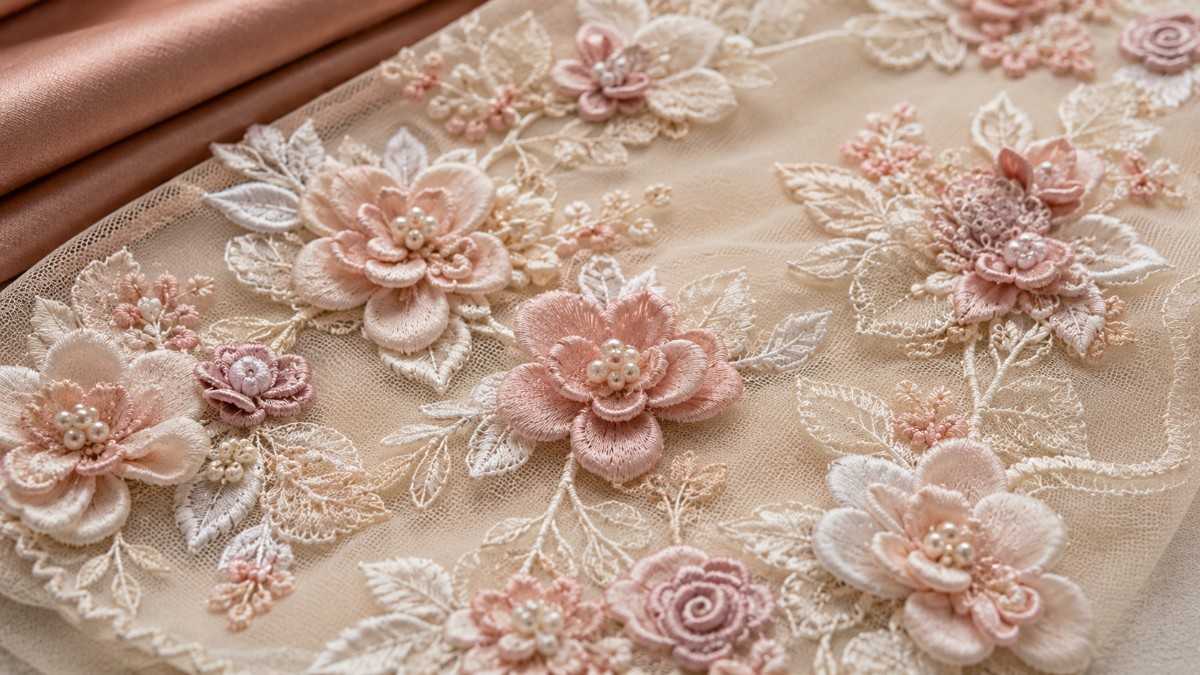
3D embroidered fabric is one of those embellishment formats that simply cannot be ignored on the retail floor. The raised, sculptural surface catches light differently from every angle, creates a tactile experience that flat embroidery cannot replicate, and communicates a level of craft and premium positioning that translates directly into stronger price points and better sell-through rates for the brands that use it.
At Shri Jagdamba Embroidery Pvt. Ltd., we produce 3D embroidered fabric on Swiss-made Lasser AG Schiffli machines, combining foam underlay technology with precision stitch engineering to deliver dimensional embroidery fabric that performs consistently across sampling, bulk production, and export-grade quality standards. If you are evaluating 3D embroidery suppliers for your next collection, this page gives you a complete technical and commercial overview.
What Is 3D Embroidered Fabric?
3D embroidered fabric is produced by placing a layer of foam or padding material beneath the surface embroidery stitching. As the machine stitches over the foam, it compresses at the stitch boundaries and rises at the unstitched centres, creating a raised, three-dimensional surface effect. The result is embroidery that stands proud of the base fabric, casting subtle shadows and creating a depth and dimensionality that flat embroidery cannot achieve.
The technique is sometimes called foam embroidery, raised embroidery, or puff embroidery, and it is widely used across premium fashion, sportswear branding, casualwear, accessories, and ethnic wear applications globally.
What makes Schiffli 3D embroidery particularly valuable for garment manufacturers is the machine's ability to execute this raised effect consistently across the full fabric width at production scale. Every motif in metre one is identical to every motif in metre five hundred, giving you the kind of repeat precision that makes cutting and construction straightforward rather than problematic.
Types of 3D Embroidered Fabric We Manufacture
All-Over 3D Embroidery Fabric
All-over 3D embroidered fabric features the raised embroidery distributed consistently across the full fabric width. This format is used for garments where the dimensional surface is the primary design element, such as structured blouses, statement tops, and premium ethnic wear panels. The foam underlay creates a uniform raised texture that gives the finished garment a rich, high-end visual weight.
Placement 3D Embroidery
Here, the 3D foam embroidery is concentrated at specific design zones within the repeat, such as a central floral motif surrounded by flat satin stitch, or a raised border motif on a fabric with flat all-over fill. This approach gives you the visual impact of dimensional embroidery without the fabric weight that all-over foam can introduce.
3D Embroidery on Patches and Panels
For garment manufacturers who need 3D embroidery at specific garment placement zones rather than across the full fabric, we produce dimensional embroidery as panels, patches, or neck pieces in Schiffli format. These are applied to garments during construction. In my experience working with garment exporters, panel-format 3D embroidery is particularly practical for brands that need to use the embellishment across multiple garment styles from the same embroidery production run.
Combined 3D and Flat Embroidery
Many of our most successful designs combine 3D foam sections with flat satin stitch, running stitch, and cutwork elements in the same design. The dimensional areas create focal points while the flat embroidery provides background texture and detail without competing weight. This layered approach gives designers significant creative range within a single fabric.
Fabric Base Options for 3D Embroidered Fabric
The base fabric choice for 3D embroidered fabric affects how the foam sits, how the finished fabric drapes, and how it performs through garment construction and consumer use.
Cotton and Organic Cotton: The most versatile and widely requested base for 3D embroidery. Cotton provides a stable, firm foundation that holds the foam embroidery without distortion. Our GOTS-certified organic cotton base is available for buyers whose sustainability requirements specify certified organic fibre inputs.
Viscose: A viscose base delivers a soft, drapey hand feel that works well for 3D embroidery on garments where the fabric needs to flow. The slight sheen of viscose also enhances the contrast between the raised foam sections and the flat base fabric surface.
Polyester and Blends: Polyester base fabrics offer dimensional stability and consistent wash performance, making them well-suited for 3D embroidery on garments with performance or durability requirements, including uniforms, sportswear, and workwear.
Linen and Cotton-Linen Blends: Natural texture bases for premium lifestyle and heritage-positioned collections. The textured surface of linen adds a second layer of visual interest beneath the raised embroidery.
Organza: A sheer, lightweight base that creates a dramatic contrast between the delicate background and the sculptural raised embroidery. Used for premium fashion and occasion wear applications.
At Shri Jagdamba Embroidery Pvt. Ltd., we work across all these base options and can advise on the best base fabric for your specific design intent and end-use garment category.
Key Features and Benefits of Our 3D Embroidered Fabric
Schiffli-Scale Precision: Our Lasser AG MVD 75 machines operate at 21.5 metres of working width. This means 3D embroidery is produced with identical foam placement, stitch tension, and motif definition across the full fabric length. The consistency you see in a sample is the consistency you receive in bulk.
Foam Underlay Control: Foam thickness and density are selected to match the design brief. Finer foam creates a subtle raised effect suitable for garments where the 3D quality should be felt more than seen. Thicker foam creates bold, highly visible dimensionality for statement fashion and branding applications.
High Stitch Density Capability: 3D embroidery requires higher stitch density than flat embroidery to hold the foam securely and create clean, sharp edges on the raised sections. Our Schiffli machines are calibrated to handle this density requirement without compromising production speed or fabric integrity.
Thread Versatility: We work with cotton, viscose rayon, polyester, and metallic threads for 3D embroidery. Thread selection affects the sheen, texture, and visual character of the raised surface. Metallic thread over foam creates a particularly luxurious effect for occasion and bridal applications.
Colorfastness Assurance: All thread colours are tested for colorfastness at our quality control stage. 3D embroidery is particularly susceptible to colour issues at stitch compression points, and our QC process specifically checks these areas.
Integrated Processing: Shri Jagdamba Embroidery Pvt. Ltd. operates within a group that includes dyeing, printing, and knitting capabilities. Greige-base 3D embroidery fabric can be dyed post-embroidery within our integrated supply chain, giving you colour flexibility without multiple vendor coordination.
Applications Across Garment and Fashion Categories
3D embroidered fabric serves a wide and growing range of applications across global fashion and apparel:
Ethnic and Festive Wear: Raised floral, paisley, and geometric motifs on kurtas, lehengas, kaftans, and dupattas. 3D embroidery on ethnic wear creates a premium, artisanal quality that resonates strongly with both domestic and diaspora buyers.
Contemporary and Western Fashion: Sculptural embroidery on blouses, co-ord set tops, jacket panels, and statement separates. Brands targeting premium casualwear and resort markets use 3D embroidered fabric to communicate craft and design investment within their collections.
Bridal and Occasion Wear: 3D floral and ornamental embroidery on bridal blouses, gown bodices, and formal separates. Combined with flat embroidery or chemical lace elements, dimensional embroidery creates the layered, couture-like visual quality that bridal buyers expect.
Sportswear and Athleisure: 3D logo embroidery on jersey and performance fabric garments. Brand identity patches with foam-raised lettering or graphic marks that communicate premium positioning within the activewear segment.
Caps, Bags, and Accessories: 3D embroidery is one of the defining embellishment formats for premium headwear and accessories. Raised logo embroidery on caps and bags is one of the most universally recognised signals of quality in these product categories.
Kidswear: Bold, tactile 3D character and shape embroidery on children's tops, dresses, and festive garments. The texture of foam embroidery is particularly engaging for children's products and adds a play element that flat embroidery cannot replicate.
I have noticed that brands often choose 3D embroidered fabric for their hero SKUs within a collection, using the dimensional embellishment to anchor their premium offering while keeping supporting styles in flat embroidery or printed fabric. This approach makes commercial sense because it concentrates the higher-cost embellishment where it delivers the most retail impact.
Manufacturing Process for 3D Embroidered Fabric at Shri Jagdamba Embroidery Pvt. Ltd.
A clear understanding of the production process helps you plan your sourcing timeline and set accurate expectations with your design and merchandising teams.
Stage 1: Design Development and Digitisation Your design brief, reference fabric, or artwork file is shared with our in-house design team. The design is converted into a Schiffli-compatible punch file specifying stitch type, density, foam placement zones, thread colour assignment, and needle positions. When we develop embroidery samples for 3D designs, we typically review foam thickness and stitch density together because both variables affect the final raised height and edge definition.
Stage 2: Material Preparation Base fabric is inspected for weight, weave consistency, and dimensional stability before loading. Thread is colour-matched to your Pantone reference or our in-house shade library. Foam sheets are cut and prepared in the specified thickness for placement beneath the embroidery zones.
Stage 3: Schiffli Machine Production Base fabric is loaded across the full 21.5-metre machine width. Foam is placed at designated positions within the design repeat. The Lasser AG machine embroiders across the full width simultaneously, with needle and shuttle coordination creating the raised embroidery surface. Foam zones receive higher stitch density passes to secure the foam and define the raised edges precisely.
Stage 4: Post-Embroidery Finishing Shearing removes surface thread irregularities outside the embroidery zone. Mending addresses any stitch interruptions identified during production. Pressing and dimensional stabilisation ensure the raised embroidery retains its height and shape through the finishing process.
Stage 5: Quality Control Every metre of 3D embroidered fabric is inspected for foam uniformity, raised height consistency, stitch density accuracy, colorfastness, and dimensional stability. Our facility is fully Inditex-audited across social compliance, health and safety, and metal detection parameters. This audit standard applies to every production run, not just to export orders for specific buyers.
Stage 6: Packing and Shipment Finished 3D embroidered fabric is packed with appropriate cushioning to protect the raised embroidery surface during transit. Roll packing with interleaving tissue is standard for delicate raised embroidery. Export documentation is handled in-house for all international orders.
Why Choose Shri Jagdamba Embroidery Pvt. Ltd. for 3D Embroidered Fabric
Swiss-Made Schiffli Machinery: Six Lasser AG MVD 75 machines at 21.5 metres each. The technical advantage of this machinery platform in producing consistent 3D embroidery is significant. Foam placement precision and stitch density control on older or lower-specification machines produce noticeably inferior results that show up as uneven raising and inconsistent edge definition in the finished fabric.
GOTS and GRS Certified Production: According to Textile Exchange, demand for certified sustainable textiles continues to grow among global fashion brands. Our active GOTS certification covers organic cotton base 3D embroidery production. Our GRS certification supports buyers with recycled fibre content requirements. Both certifications are maintained with full audit documentation.
Inditex Compliance: Social audit, health and safety audit, and metal detection audit clearances are maintained across our facility. This compliance framework signals a level of operational maturity and transparency that protects your supply chain reputation with your own buyers.
Integrated Vertical Capability: Dyeing, printing, knitting, and embroidery within our group of companies. This means your greige 3D embroidery fabric can be dyed to season-specific colours within the same coordinated supply chain, reducing lead time and eliminating the quality risk that comes with outsourced dyeing.
Design Confidentiality: Every custom 3D embroidery design is treated as exclusive to the buyer. Files are not shared, replicated, or used for any other client. When we develop embroidery samples for new clients, this confidentiality commitment is formalised from the first conversation.
Export-Ready Infrastructure: All export documentation, packing specifications, and shipment coordination are handled in-house. Our Faridabad location gives you convenient access to Delhi's international freight infrastructure.
Customization Options for 3D Embroidered Fabric
Every 3D embroidery order at Shri Jagdamba Embroidery Pvt. Ltd. is a bespoke production project. You control:
Design and Motif: Completely original from your brief. Floral, geometric, abstract, sculptural, or brand-specific motifs. All-over, placement, border, or panel format.
Foam Thickness: Fine, medium, or heavy foam underlay depending on the required raised height and garment application.
Base Fabric: Cotton, organic cotton, viscose, polyester, linen, organza, or custom blends. Selected to match your garment construction and drape requirements.
Thread Type and Colour: Cotton, viscose rayon, polyester, or metallic. Matched to Pantone or your supplied swatch. Multi-colour designs handled with precision colour separation in the punch file.
Embroidery Format: All-over, placement, panel, patch, or combined 3D and flat embroidery within the same design.
Finishing: Sheared, pressed, and dimensional stability-treated. Dyeing coordination available within our group for greige base fabrics.
Packaging: Roll packing with tissue interleaving, folded packing, or cut-length with poly-bag and label to your specification.
Sustainability and Certifications
Sustainability in embroidery fabric sourcing is increasingly a buyer requirement rather than a preference. Our certifications give you the documentation you need to satisfy your own compliance obligations.
GOTS (Global Organic Textile Standard): Covers production using organic cotton base fabrics and compatible thread inputs. Full chain-of-custody documentation available with certified orders.
GRS (Global Recycled Standard): Applicable to production incorporating recycled polyester or other recycled fibre inputs. Supports buyers with recycled content targets in their product specifications.
Inditex Compliance: Social audit, health and safety, and metal detection compliance maintained. One of the most rigorous vendor frameworks in global fashion retail.
Our R&D team actively develops 3D embroidery using sustainable yarn options including dyed organic cotton, viscose, and multi-colour sustainable thread combinations, ensuring our production capability and sustainability credentials advance together.
Start Your 3D Embroidered Fabric Project With Us
If you are a garment exporter, fashion brand, or sourcing manager looking for a technically capable, certified, and export-ready 3D embroidered fabric manufacturer in India, Shri Jagdamba Embroidery Pvt. Ltd. is ready to work with you from first design concept through to shipped bulk fabric.
Request a sample and evaluate the foam height, stitch precision, and fabric hand in person. Share your design brief and receive a structured quotation with clear production timelines. Discuss your collection requirements with our technical team and get straightforward, expertise-backed guidance.
We work with buyers who understand that 3D embroidery quality is not negotiable. If that describes your sourcing standard, we should be talking.
Contact us at sales@sjepl.in or call 0129-4324141. Visit us at Plot No. 55, Sector 68, Phase IMT, Faridabad, Haryana 121004.