Walk through any fabric market known for embroidered textiles and sooner or later someone will point you toward a bolt of cloth covered in delicate lace like patterns and call it schiffli fabric. It has a reputation that precedes it. Designers reach for it when a garment needs to feel elegant without looking overworked and home decor brands turn to it when a curtain or cushion cover needs a touch of refinement that plain cloth simply cannot deliver.
Yet despite how often the term comes up many people are not entirely sure what schiffli fabric actually is or how it earns that reputation for delicate craftsmanship. Understanding its origin its production process and the materials it is built on helps explain why it continues to hold such a strong place in both fashion and interior textiles.
What Is Schiffli Fabric Really
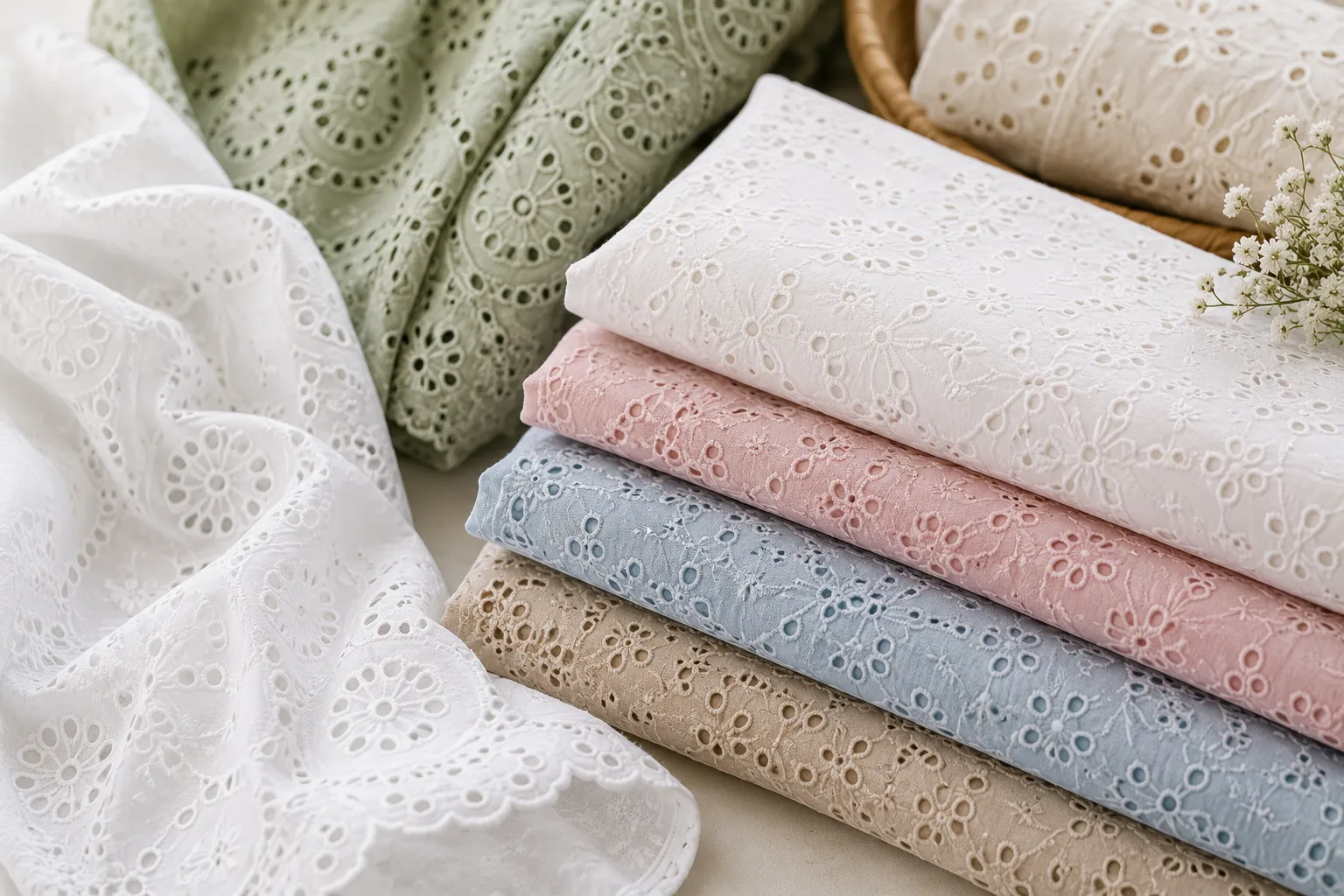
What is schiffli fabric at its core comes down to one simple idea. It is not a fiber or a raw material on its own. It is a base fabric that has been decorated using a specialized multi needle embroidery machine known as a schiffli machine. The result is a textile covered in intricate eyelet cutwork or lace like patterns that look far more complex than most embroidery techniques can achieve at the same speed and scale.
This distinction matters because many people mistakenly assume schiffli refers to a specific type of thread or weave. In reality it describes the embroidery technique applied to an existing base cloth which is why you will often see it referred to alongside the base material such as cotton schiffli or georgette schiffli depending on what the embroidery has been stitched onto.
Schiffli Fabric Meaning and Where the Name Comes From
The schiffli fabric meaning traces directly back to its origin in nineteenth century Switzerland. The word schiffli comes from the Swiss German term for little boat and it refers to the small boat shaped shuttle used inside the embroidery machine to carry the bobbin thread. This shuttle glides back and forth beneath the fabric in a motion that resembles a tiny boat moving across water which is exactly where the name took hold.
The machine itself was developed by Isaak Grobli in the eighteen sixties and it completely changed how embroidered textiles were produced. Before this invention intricate lace like patterns had to be created by hand which was slow and inconsistent. The schiffli machine introduced a mechanized lock stitch process similar to a sewing machine but scaled up with hundreds of needles working across the width of the fabric at once allowing complex designs to be replicated with remarkable speed and precision.
How Schiffli Fabric Is Actually Made
The production process behind schiffli fabric is more technical than most people realize. A base fabric is stretched tightly across a wide embroidery frame and the schiffli machine stitches a predetermined design across its surface using hundreds of needles working in coordinated rows. For eyelet and cutwork styles a chemical process is often used afterward where the fabric is treated so that certain unembroidered sections dissolve away leaving only the stitched lace pattern behind.
This is part of what gives certain schiffli embroidery fabric its distinctive sheer and airy character since the base cloth in specific areas is deliberately removed while the surrounding stitched thread holds its shape. Once the embroidery and any chemical treatment is complete the fabric typically goes through washing dyeing and finishing stages to achieve its final texture color and softness before it reaches designers or retailers.
The Materials Behind Schiffli Fabric
Schiffli fabric material varies depending on the intended use and the look a designer wants to achieve. Cotton remains one of the most common bases since it is breathable comfortable and holds embroidery stitching cleanly which makes it a favorite for everyday wear and summer collections. Voile and organza are also frequently used when a lighter more transparent finish is needed particularly for garments where the embroidery itself should feel like it is floating on the fabric rather than sitting heavily on top of it.
Net based schiffli fabric material is another popular choice especially for occasions where a delicate see through effect is desired such as veils overlays and formal eveningwear. Each base material changes how the finished embroidery behaves. Cotton tends to give a crisper more structured pattern while sheer bases like net and organza allow the stitched design to stand out more dramatically against the visible skin or lining beneath.
Where Schiffli Fabric Shows Up in Fashion and Home Decor
The versatility of schiffli fabric is one of the biggest reasons it has remained relevant across so many decades of shifting fashion trends. In clothing it appears in everything from casual summer dresses and blouses to elaborate bridal gowns where a more delicate lace like variation is often preferred. Its lightweight breathable nature makes it particularly popular in warmer climates where comfort matters just as much as appearance.
Beyond fashion schiffli fabric has carved out a strong presence in home decor as well. Curtains table runners cushion covers and decorative bedding frequently feature schiffli work since the embroidered texture adds a sense of craftsmanship to interior spaces without requiring an entirely custom textile design. For anyone drawn specifically to the sheer romantic look often associated with bridal and formal wear schiffli lace fabric tends to be the specific category worth exploring since it leans further into the delicate net based and eyelet heavy styles that define classic lace aesthetics.
Buying Schiffli Fabric Online and What to Look For
Shopping for schiffli fabric online has become far more common as more textile retailers move their catalogs onto digital platforms. This shift makes it easier to compare base materials embroidery density and pricing across multiple sellers before committing to a purchase but it also means buyers need to pay closer attention to fabric descriptions since the visual richness of schiffli work does not always translate perfectly through a photograph.
When browsing schiffli fabric online it helps to check the listed base material first since this determines how the fabric will drape and feel once made into a finished garment or decor piece. Requesting a swatch before committing to a large order is a smart practice many established sellers offer precisely because subtle differences in thread color embroidery density and fabric weight can be difficult to judge from images alone. Reviewing seller ratings and return policies also matters more with embroidered textiles than with plain fabric since the intricate stitching adds both value and vulnerability that plain cloth does not carry.
Caring for Schiffli Fabric So It Lasts
Because schiffli fabric combines a base material with delicate embroidered thread it requires slightly more careful handling than plain cloth. Hand washing or using a gentle machine cycle with cold water helps preserve both the fabric and the stitching over time. Harsh detergents and bleach should generally be avoided since they can weaken thread fibers and dull the crisp appearance that makes schiffli work so appealing in the first place.
Drying schiffli fabric flat or on a low tumble setting rather than high heat also helps prevent the embroidered sections from warping or shrinking unevenly compared to the surrounding base cloth. With reasonable care schiffli fabric can maintain its texture and detail for years which is part of why it remains such a trusted choice for garments and decor pieces meant to be kept and used repeatedly rather than treated as disposable.
Conculsion
Schiffli fabric represents a rare combination of mechanized efficiency and genuinely intricate craftsmanship. From its nineteenth century Swiss origin and the little boat shaped shuttle that gave it its name to the wide range of base materials it can be stitched onto today schiffli fabric continues to hold a respected place across fashion and home textiles. Whether you are searching to understand what schiffli fabric actually is exploring different schiffli fabric material options or browsing schiffli fabric online for your next project its lasting popularity comes down to one simple truth. Few embroidery techniques manage to look this detailed while still being produced at a scale that keeps it accessible to designers and buyers around the world.