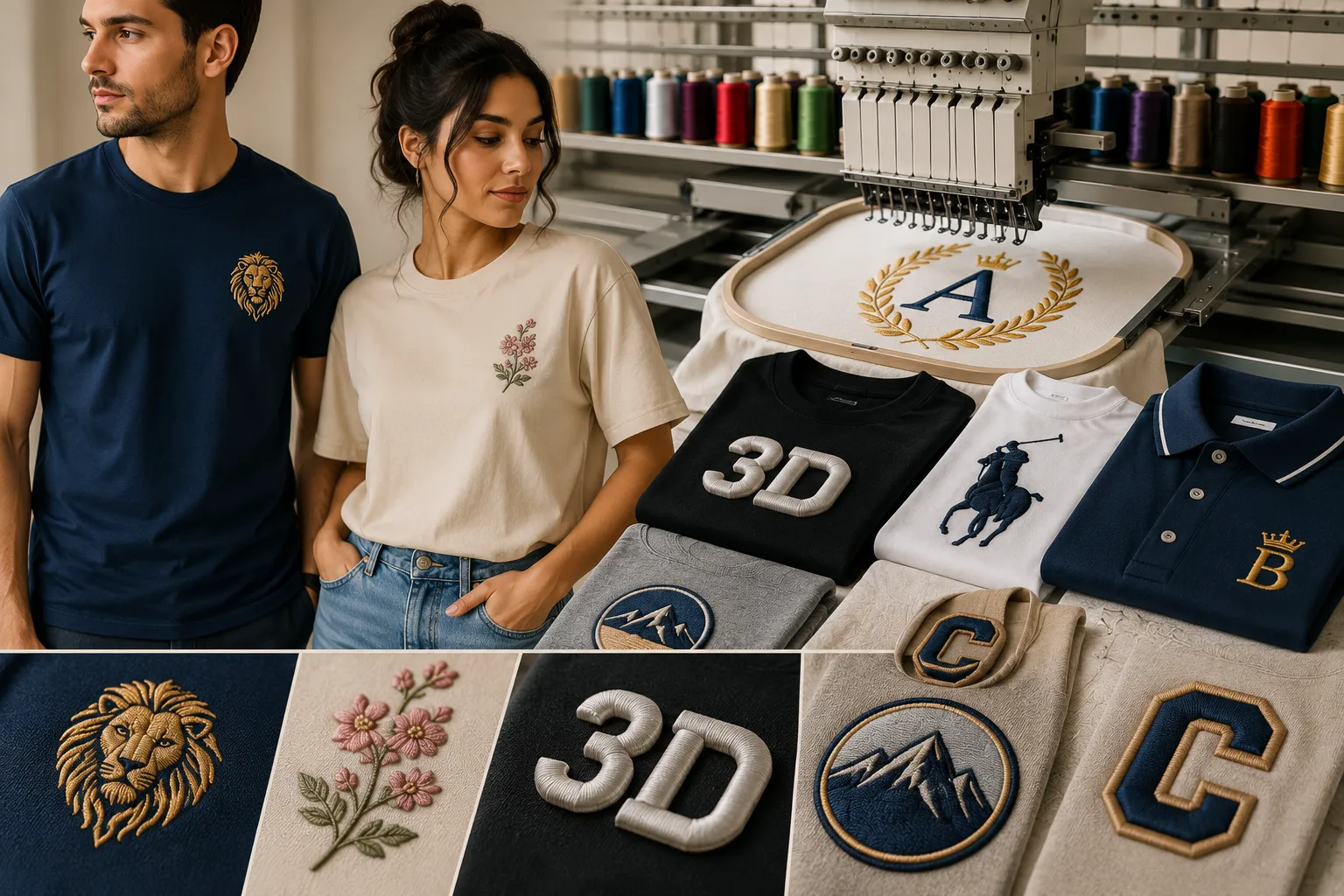
Walk into any office team huddle or retail store today and you will notice something. The shirts that catch attention are rarely the ones with a printed graphic. They are the ones with a small stitched logo sitting neatly on the chest catching light as the person moves. Custom t shirt embroidery has quietly become the branding choice that separates a shirt people actually want to wear from one that ends up at the back of a drawer.
A t shirt is the most flexible garment a brand can decorate. It shows up at corporate events sports fields retail counters and casual weekend outings. Because it travels through so many settings the way it looks and holds up over time says a lot about the brand behind it. This is exactly why more businesses are moving away from basic printing and putting their trust in embroidery instead.
From Printing to Stitching a Shift Brands Are Making
Printed graphics sit on top of fabric. They crack after a few washes peel at the edges and lose their sharpness faster than most brands would like. Embroidery works differently since the thread becomes part of the fabric itself which means the design survives years of washing folding and daily wear without losing its shape. That single difference is why so many companies searching for reliable embroidery services end up choosing stitched branding over printed alternatives for anything meant to last.
This shift is not just about durability though. There is a tactile quality to embroidery that a flat printed image cannot replicate. Raised stitches catch light and shadow differently depending on the angle giving the shirt a subtle sense of movement and depth. People notice this even if they cannot explain exactly why a certain shirt feels more premium than another.
What Actually Happens Before the Needle Touches Fabric
Good embroidery does not begin at the sewing machine. It begins with a design brief and a conversation about what the brand wants to communicate. That artwork is then digitized into a stitch file which tells the machine exactly where to place every thread. Getting this step right matters more than most people realize because a poorly digitized file leads to a blurry uneven finish no matter how advanced the machine is.
Once digitizing is approved thread colors are matched against brand guidelines and a sample is usually stitched before the full order goes into production. This is the stage where placement gets finalized too. Chest placement remains the industry favorite because it stays visible without dominating the shirt while sleeves and back panels are reserved for bolder statements like team names or larger graphics.
Building Brand Depth With Layered Designs
Some logos are simple enough for straightforward stitching but others carry more visual weight and need a technique that can handle that complexity. For designs with multiple fabric layers or a bolder silhouette many brands turn to applique embroidery where extra fabric pieces are stitched onto the shirt to build shape and contrast that flat embroidery cannot achieve on its own. Mascots crests and larger brand marks often look far more striking once this technique is applied.
Sportswear and Streetwear Ask for Something Bolder
Athletic brands and streetwear labels tend to want their logos to be felt as much as seen. This is where 3d embroidery comes into play since it lifts the design off the fabric surface with a raised puffy texture that stands out even from a distance. On heavier t shirt fabric this technique gives a jersey or a streetwear drop the kind of bold physical presence that flat stitching simply cannot deliver.
Corporate Uniform Programs Need Consistency Not Just Style
For businesses running large uniform programs the branding conversation is not only about how the logo looks but also how much supporting information needs to be communicated across every shirt. Sizing details and care instructions are often added through neck patches embroidery which is stitched separately and then attached so the main design stays clean while the practical details are still clearly visible. This small addition makes a big difference when a company is managing hundreds of uniforms across different departments.
Seasonal Campaigns and Promotional Runs
Not every brand wants to embroider directly onto each individual shirt especially during time sensitive promotional campaigns. In these cases patch embroidery offers a faster route since designs can be produced separately in bulk and then attached through stitching or heat sealing whenever needed. This approach works particularly well for event merchandise or limited run campaigns where speed matters as much as quality.
Scaling From a Small Order to a Full Production Run
Startups and small teams often begin with modest quantities just to test a design before committing further. As demand grows the same brands eventually move toward wholesale t shirt embroidery where larger quantities bring down the per piece cost since digitizing and machine setup expenses get spread across more units. Multi head machines make this scaling possible without sacrificing consistency since dozens of shirts can be stitched simultaneously with identical thread colors and stitch patterns.
Businesses that plan their orders around this tiered pricing structure often save significantly compared to placing several smaller repeat orders. Wholesale t shirt embroidery rewards brands that think ahead whether that means outfitting an entire office building a season of team merchandise or preparing stock for a retail launch.
Fabric Still Decides the Final Result
No embroidery technique can fully compensate for the wrong fabric choice. Heavier cotton and cotton blend shirts hold stitches firmly and resist puckering while lighter or stretchable fabric needs careful backing and reduced stitch density to avoid distortion. Providers who understand this evaluate fabric weight before finalizing any design because the same logo can look completely different depending on what it is stitched onto.
Caring for the finished shirt matters just as much as producing it well. Turning garments inside out before washing using a gentle cycle with cold water and avoiding harsh detergents all help preserve the sharpness of the stitching for years rather than months.
Choosing a Partner Worth Sticking With
Price alone should never be the deciding factor when picking an embroidery partner. Look instead at their machine capacity the range of techniques they offer and how they handle both small test orders and full wholesale t shirt embroidery runs. A provider who walks clients through digitizing sampling and approval before production begins is one that understands quality cannot be rushed.
Conclusion
Custom t shirt embroidery has moved well beyond being a simple branding option. It has become a signal of how much care a business puts into the products it puts its name on. Whether the need is a clean chest logo a layered design built through applique embroidery a bold raised finish using 3d embroidery detailed information added through neck patches embroidery or a fast turnaround with patch embroidery for a seasonal drop the right partner can turn a plain shirt into something people genuinely want to wear and keep wearing.