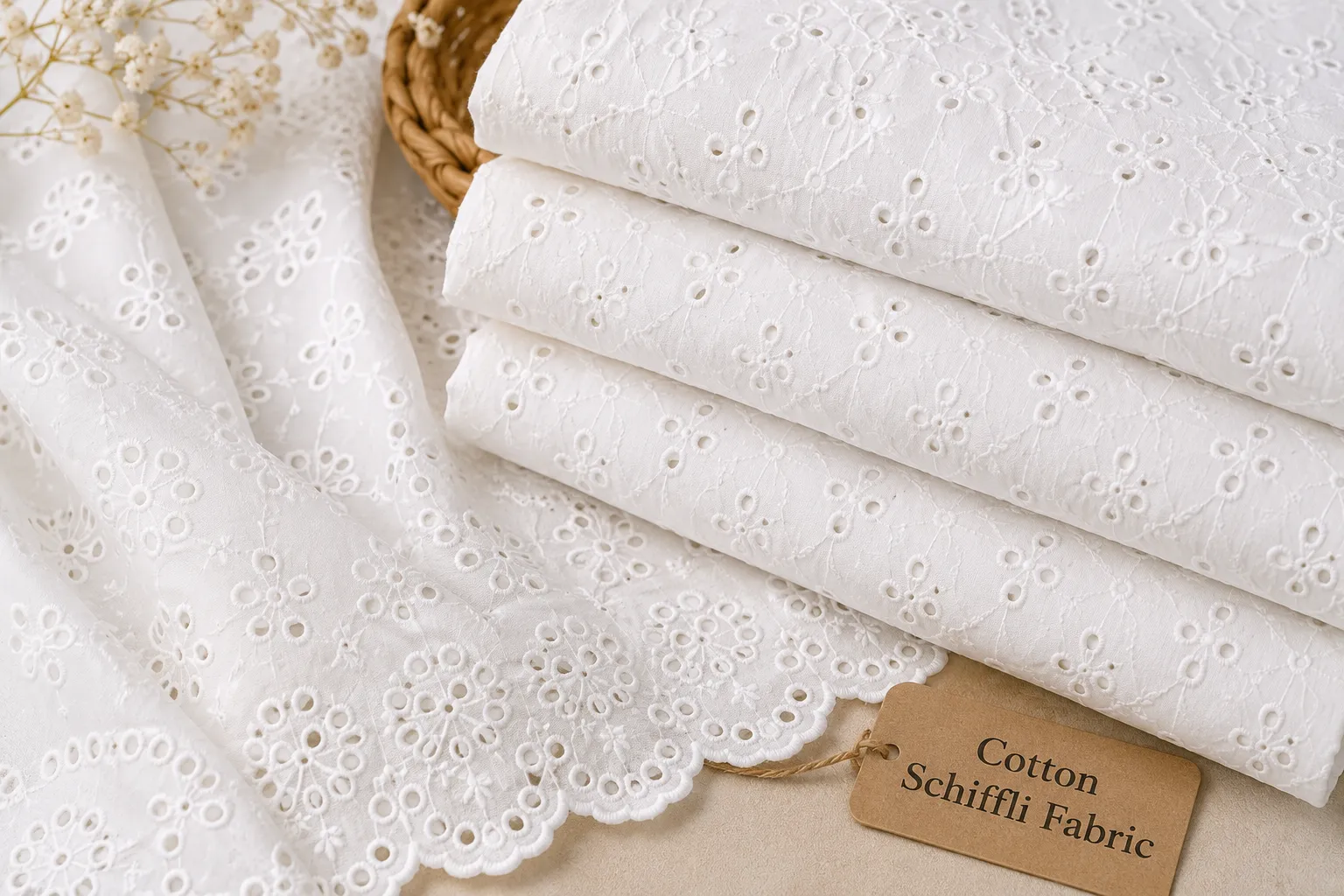
Summer wardrobes and festive ethnic collections both keep returning to one fabric that manages to feel both delicate and durable at the same time. Cotton schiffli fabric has earned that reputation because it combines the everyday comfort of natural cotton with the intricate lace like embroidery that schiffli machines are known for producing at scale. It shows up in everything from a simple kurti to a fully embellished bridal blouse and its popularity only continues to grow among designers who want detail without sacrificing wearability.
What makes this particular combination stand out is not just the embroidery itself but the base cloth it sits on. Cotton brings breathability softness and a natural drape that many other fabrics simply cannot match which is exactly why cotton schiffli embroidery fabrics remain a staple across so many categories of clothing year after year.
Why Cotton Became the Preferred Base for Schiffli Work
Schiffli embroidery can technically be applied to a wide range of fabrics including linen silk and various synthetic blends but cotton has held a special place in this process since the technique first spread beyond Europe. Cotton fibers hold stitching cleanly which allows the intricate eyelet and cutwork patterns that define schiffli work to sit crisply on the surface without the fabric puckering or distorting under the weight of dense embroidery.
Beyond its technical suitability cotton simply feels good against the skin. Its natural breathability makes cotton schiffli fabric especially popular for summer collections where comfort matters just as much as visual appeal. Designers working on everyday wear as well as occasion pieces both gravitate toward cotton bases because the fabric performs reliably across different climates and body types without losing its shape or texture after repeated wear.
From Raw Cloth to Finished Embroidered Fabric
Every piece of cotton schiffli fabric begins its journey as a plain undyed base cloth. This starting material known in the textile industry as cotton greige fabric is what gets stretched across the wide embroidery frame before a single stitch is placed. Choosing a quality greige base matters more than most buyers realize since any inconsistency in the raw weave will show through once the finished embroidery is complete.
Once the greige fabric is properly prepared the schiffli machine takes over stitching intricate patterns using hundreds of coordinated needles working across the width of the cloth simultaneously. For cutwork and eyelet styles a chemical process often follows where select unembroidered sections of the base fabric are dissolved away leaving only the stitched thread pattern behind. The fabric then moves through washing dyeing and finishing stages before it reaches its final color texture and softness ready for garment production.
The Different Styles of Cotton Schiffli Embroidery Fabrics
Not all cotton schiffli embroidery fabrics look or function the same way and understanding the different styles helps buyers choose the right one for their specific project. Allover schiffli work covers the entire fabric surface with continuous embroidery from one edge to the other which creates a rich fully embellished look often used for statement kurtas and dresses.
Border schiffli embroidery takes a more restrained approach by concentrating the stitched pattern along the edges of the fabric which is a favorite choice for palazzo pants long flared skirts and dupattas where a decorative trim adds elegance without overwhelming the entire garment. Hakoba style cotton schiffli which features a distinctive lace like eyelet pattern is particularly popular in unisex kurta fabric and traditional ethnic wear where a lighter breathable finish is preferred over heavier all over embroidery.
Some cotton schiffli embroidery fabrics also incorporate raised three dimensional stitching techniques that add a textured tactile quality to the design. This variation tends to catch light differently than flat embroidery giving the fabric a more dimensional appearance that works particularly well for statement pieces and premium garment collections.
Where Cotton Schiffli Fabric Shows Up Across Fashion
The versatility of cotton schiffli fabric means it rarely stays confined to a single category of clothing. In womenswear it appears across kurtis co ord sets dresses and even bridal blouses where a lighter cotton base offers a comfortable alternative to heavier bridal fabrics. Menswear has embraced it just as strongly particularly in kurta and sherwani fabric where allover or border embroidery adds a refined festive touch to traditional silhouettes.
Children's clothing is another category where cotton schiffli fabric performs especially well since its breathability and softness make it comfortable for young skin while the delicate embroidery gives even simple garments a special occasion feel. Beyond apparel the fabric has also found a strong home in interior textiles where cushion covers table runners and light curtains benefit from both the durability of cotton and the ornamental character of schiffli embroidery.
How Cotton Compares to Other Schiffli Fabric Bases
While cotton remains the most requested base for schiffli embroidery it is worth understanding how it compares to other options available in the market. For a broader look at how different base materials including net voile and organza each change the final character of embroidered fabric it helps to explore a complete schiffli fabric guide that breaks down how sheer bases behave differently than cotton under the same embroidery technique.
Generally speaking cotton offers a more structured crisp finish compared to the sheer floaty quality that net or organza bases provide. This makes cotton schiffli fabric the more practical choice for everyday wear and casual occasion pieces while sheer bases tend to be reserved for eveningwear and bridal applications where a more delicate transparent effect is desired.
Caring for Cotton Schiffli Fabric So It Lasts
One of the underrated advantages of choosing a cotton base is how forgiving it tends to be during regular care compared to more delicate schiffli fabrics. Cotton schiffli fabric generally withstands gentle machine washing far better than sheer or synthetic bases though hand washing in cold water remains the safest approach for preserving both the fabric color and the crispness of the embroidered pattern over time.
Avoiding harsh detergents and bleach helps protect the stitching from weakening prematurely while air drying or a low tumble setting prevents both the base cloth and the embroidered sections from shrinking unevenly. With proper care garments made from cotton schiffli fabric can maintain their texture and visual appeal through years of regular wear which is part of why the fabric continues to be treated as a long term wardrobe investment rather than a seasonal trend piece.
What to Look for When Choosing Cotton Schiffli Fabric
Buyers sourcing cotton schiffli embroidery fabrics for garment production should pay close attention to a few key details before committing to a bulk order. The quality of the underlying greige base plays a significant role in how the finished embroidery will look and hold up which is why working with a supplier who controls both the base fabric quality and the embroidery process tends to produce more consistent results than sourcing each stage separately.
Stitch density thread quality and finishing consistency across a production run also matter considerably especially for buyers producing garments at scale. Requesting a sample swatch before finalizing a larger order remains one of the most reliable ways to confirm that the fabric's hand feel color accuracy and embroidery detail match expectations before committing to a full production quantity.
Conculsion
Cotton schiffli fabric continues to hold its place as one of the most trusted choices in embroidered textiles precisely because it balances comfort durability and intricate craftsmanship in a way few other fabric combinations manage. From its foundation in quality greige cloth through the detailed stitching process that defines every schiffli pattern cotton remains the base material that designers and buyers return to again and again for both everyday wear and special occasion pieces. Whether the need is allover embroidery for a statement garment delicate border work for a subtle finishing touch or dependable cotton schiffli embroidery fabrics for a full production run understanding how this fabric is made and cared for makes it far easier to choose the right option for any project.