This page is for brand teams, buying desks, and sourcing managers who need logo embroidery services for t-shirts, polos, shirts, and other garments in sizes, quantities, and qualities that “looked fine on a sample” are not an option anymore. We will discuss stitch counts, digitization, fabric to embroidery pairing, and other details that frequently become points of contention when a twenty-piece logo embroidery sample turns into a twenty thousand piece production order.
Why Logo Embroidery Is Its Own Discipline
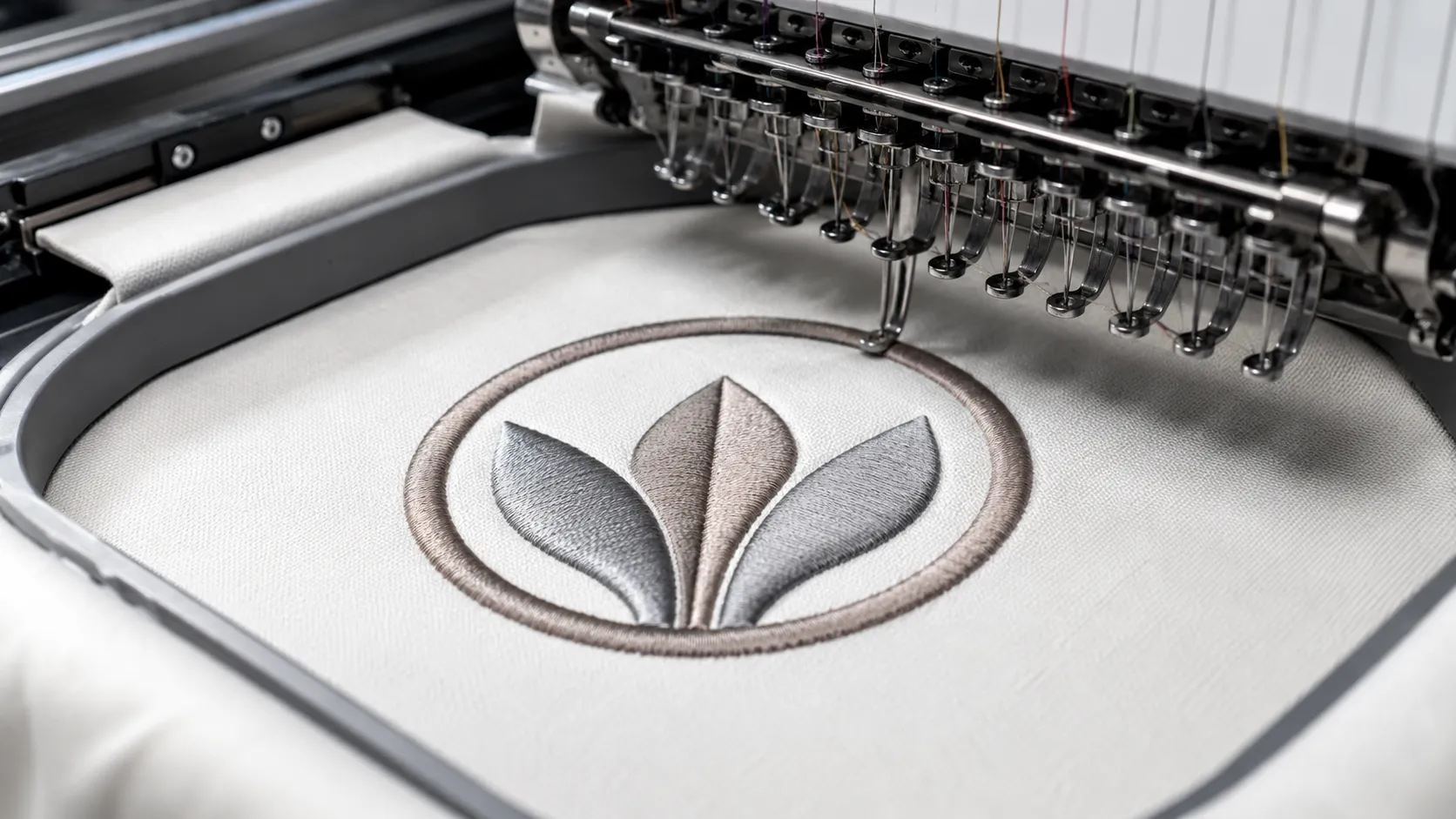
Embroidering a full floral pattern across a meter of fabric and embroidering a 2inch logo onto a chest panel are not the same skill despite sharing the same class of machine. A big all-over pattern has space to absorb minor inconsistencies within its repeat. A logo does not. Each letter, curve, and block of color in a small format logo has to be digitized with enough precision that it reads clearly in actual size, not just a preview on a zoomed-in screen.
In my experience working with garment exporters and apparel brands, the single biggest source of rejected logo embroidery samples has nothing to do with the machine, and everything to do with the digitizing file. A logo that was never designed for embroidery, converted straight from a vector logo file without adjusting for stitch direction and density, almost always comes back looking slightly off. Text logos are especially unforgiving in this area since thin letterforms below a point size cannot maintain their shape when translated into thread.
What Determines whether a Logo Embroiders Well
Prior to even considering fabric or garment type, a logo itself has to pass a basic embroiderability test. A few things we check first:
Letter and line thickness. Fine serif fonts or thin outline logos need to be adjusted prior to digitizing, as stitches will merge into an illegible blob at smaller sizes. We will often recommend a slightly bolder digitized version of a logo specifically for embroidery use, separate to the print or web version of the same logo.
Number of thread colours. Each change of colour means a break and re-start of the thread on the machine, adding extra production time and cost with each additional colour. Four or less colour logos sew consistently and quickly than a six or seven colour logo, especially at volume.
Gradient and shading elements. Gradients that appear smooth in a digital logo file have to be simulated using colour blending techniques in embroidery, as thread does not gradient like ink or pixels. One of the most common places where a first time buyers expectations and what embroidery can actually do clash.
Minimum text size. As a rough guide text below roughly 5mm cap height becomes illegible in standard embroidery, though this varies depending on font weight and fabric texture. If your logo features a tagline in small type, that is usually the first thing we flag during file review.
Fabric and Placement: T-Shirts, Polos, and Shirts Each Behave Differently
Logo embroidery on tshirt fabric is the most common request we get, but t-shirt knits, polo pique, and woven shirting fabric all respond differently to a needle, and treating them the same is where a lot of quality issues start.
T-shirt knits have stretch in ways woven fabric does not, which means stabilizer backing is not optional. Without the right cutaway or tearaway backing matched to the knit's stretch, chest logos on t-shirts tend to pucker around the edges the first time they are stretched or washed. For high quality t shirt embroidery, it's where more of the quality lives than most buyers assume.
Polo pique has more surface texture than a flat t-shirt knit, which can slightly reduce the clarity of fine detail in logos, so we sometimes recommend a marginally simplified digitizing file for pique placements compared to what we would run on Jersey.
Woven shirting fabric, used for corporate and formal shirts, tends to hold embroidered designs more precisely than knits because it doesn't stretch, but has greater tendency to exhibit puckering if stitch density is not calibrated to the fabric weight. A heavier twill shirt tolerates denser stitching than a lightweight poplin.
We cover garment specific detail on our dedicated pages for logo embroidery on shirts and logo embroidery on t-shirts, which go deeper into placement standards and stabilizer choices for each garment category specifically.
Digitizing to Delivery: How We Execute a Logo Embroidery Order
What customers don't know about when they buy custom logo embroidery services is what steps happen in between. Here's where we take your logo file, and turn it into finished, wearable products.
1. First, we check and make sure that the file that you send us is embroiderable.
If it is simply a print file that needs to be recreated as a stitch file, our digitizing team will recreate it in an embrioderable format for you, taking into account the direction of the stitches, underlay, and density based on the fabric and garment that it will be applied to.
2. Second, we do a strike-off for you on your specified fabric or garment so that you can review the design, size, and placement before we produce any quantities.
3. Third is colour and placement approval, which is where we match up the thread colours to your Pantone references if you have provided them, and where we approve the height of logo on the chest, or placement on the sleeves or pockets based on your specification sheet.
4. Fourth, we produce the garment in bulk with in-process checks so that we're not leaving everything to a final inspection at the end, as a method of catching any issues with tension or registration that might arise during production if you have a larger order.
5. Fifth, we finish the garment, which involves trimming any excess threads, and mending any loose threads or areas of the garment that have been affected by the embroidery.
6. Sixth, we package the goods for export, with desiccant bags to keep your garments dry in case of any condensation, and boxes appropriate to either domestic transport within India, or ocean freight for international buyers.
Choosing Between Embroidery and Print for Your Logo
A question we get constantly from brand teams deciding on trims for a new collection: should this logo be embroidered or printed. There is no universal right answer, but there is a clear way to think about it.
| Factor | Logo Embroidery | Screen or Digital Print |
|---|---|---|
| Perceived garment value | Higher, reads as premium | Lower cost perception |
| Durability over wash cycles | Very high, thread does not crack or fade like ink | Can crack, fade, or peel over repeated washing |
| Small text and fine detail | Limited below a minimum size | Handles fine detail well |
| Best suited for | Corporate uniforms, premium retail, caps, polos | Graphic-heavy designs, large placements, gradients |
| Feel on fabric | Raised, tactile | Flat, no texture |
For a chest logo on a corporate uniform shirt or a premium retail polo, embroidery almost always wins on durability and perceived quality. For a large graphic across the back of a t-shirt with multiple gradient colours, print is usually the more practical and cost-effective route. Many of our clients end up using both within one collection, embroidered logos on the chest and sleeve, printed graphics for larger back placements.
Mistakes We See Most Often With Logo Embroidery Orders
Approving a digital mockup instead of a physical strike-off. A rendered image of a logo in embroidery doesn't tell us anything about how the final embroidery will look. The colours shown on a screen don't behave in the same way as threads, and we insist on getting a physical sample approved for production before any larger orders are placed, even if a buyer is happy with the initial mockup.
Sending a print logo file straight for digitizing without adjustment. As we've already said, a logo file intended for print or web is unlikely to translate well to embroidery, and sending the file for immediate digitizing without requesting embroiderability review is the most common reason why buyers end up asking their embroidery partner to redo embroidery artwork.
Not taking into account how increased number of colours affects lead time. A logo with seven colours will necessarily take much longer to produce in bulk than a logo with three colours, due to the amount of time it takes to stop the machine and change thread. If your deadline is tight, you might want to discuss this with an embroidery partner before the embroidery artwork is finalized.
Not requesting a placement specification sheet for orders with multiple styles. To ensure that a logo placement is consistent across different styles (such as t-shirts, polos and shirts), it's vital to request a measurement sheet that can serve as a guide during sewing to make sure that the logo isn't placed differently on different styles.
Building Trust Before the First Order
For brands and buying houses looking to appoint a new embroidery partner, the majority of due diligence takes place before a single unit is produced. Shri Jagdamba Embroidery Pvt. Ltd. hosts its logo embroidery services at a Faridabad facility on Swiss Lasser AG Schiffli machines, delivering the stitch precision required by small-format logo embroidery particularly. The site is GOTS and GRS-certified and has passed Inditex-standard social, health and safety, and metal detection audits – documentation most corporate and export buyers request before a first purchase order.
By operating within a group that also houses in-house dyeing and printing, Shri Jagdamba Embroidery is positioned to guide on fabric and trim decisions with a wider view than a standalone embroidery unit – an important consideration when a single collection requires both embroidered chest logo and printed back graphic.
Request Samples or Talk Design
If you have an existing logo file or rough brand guidelines and garment style in mind, our team can review embroiderability, strike off sampling and MOQ’s prior to bulk order. Request samples, discuss design development, receive a technical consultation on fabric and thread or request an export quotation for your next logo embroidery project.